Dry Ice Blasting | Dry Ice Blasting Equipment

Dry Ice Blasting, Dry Ice blast Cleaning Dry Ice Blasting, Dry Ice blast Cleaning
Dry Ice Blasting, Dry Ice blast CleaningOverviewProductsApplicationsContact  Innovative Dry Ice Blast Cleaning Systems


CMW CO2 TECHNOLOGIES

CMW CO2 TECHNOLOGIES - a name standing for precision engineering, metal tooling, cutting and surface preparation. Our origins go back to 1955, when the founding fathers of our company built a maintenance and repair business for Heavy Electrical Rotating Machinery, such as large industrial motors, power station generators and related equipment.

In early 2003 the CMW division was established to develop and manufacture Dry Ice Blasting Equipment and to provide Dry Ice Blasting Services to our Indian power station clients, using our advanced crystal particle blast cleaning technology. Since 2004, we supply customers around the world with our innovative CO2 blast cleaning systems.

Dry Ice Crystal Blasting was added to the product offering in 2004, which is recognized as a very important part of the Dry Ice Blasting Industry today, since it is the only safe Dry Ice Blasting method suitable for very sensitive surfaces and components.

Dry Ice Blasting, Dry Ice Blast Cleaning

Dry Ice Blasting, Dry Ice blast Cleaning Dry Ice Blasting, Dry Ice blast Cleaning Dry Ice Blasting, Dry Ice blast Cleaning Dry Ice Blasting, Dry Ice Blast Cleaning
Dry Ice Blasting, Dry Ice Blast CleaningDry Ice Blasting, Dry Ice Blast Cleaning Dry Ice Blasting, Dry Ice Blast Cleaning
            

CMW Dry Ice Blasting, is the modern non-abrasive alternative for many conventional cleaning methods such as sand, water, steam or powder blasting and of course, the use of solvents and lots of manual labor.


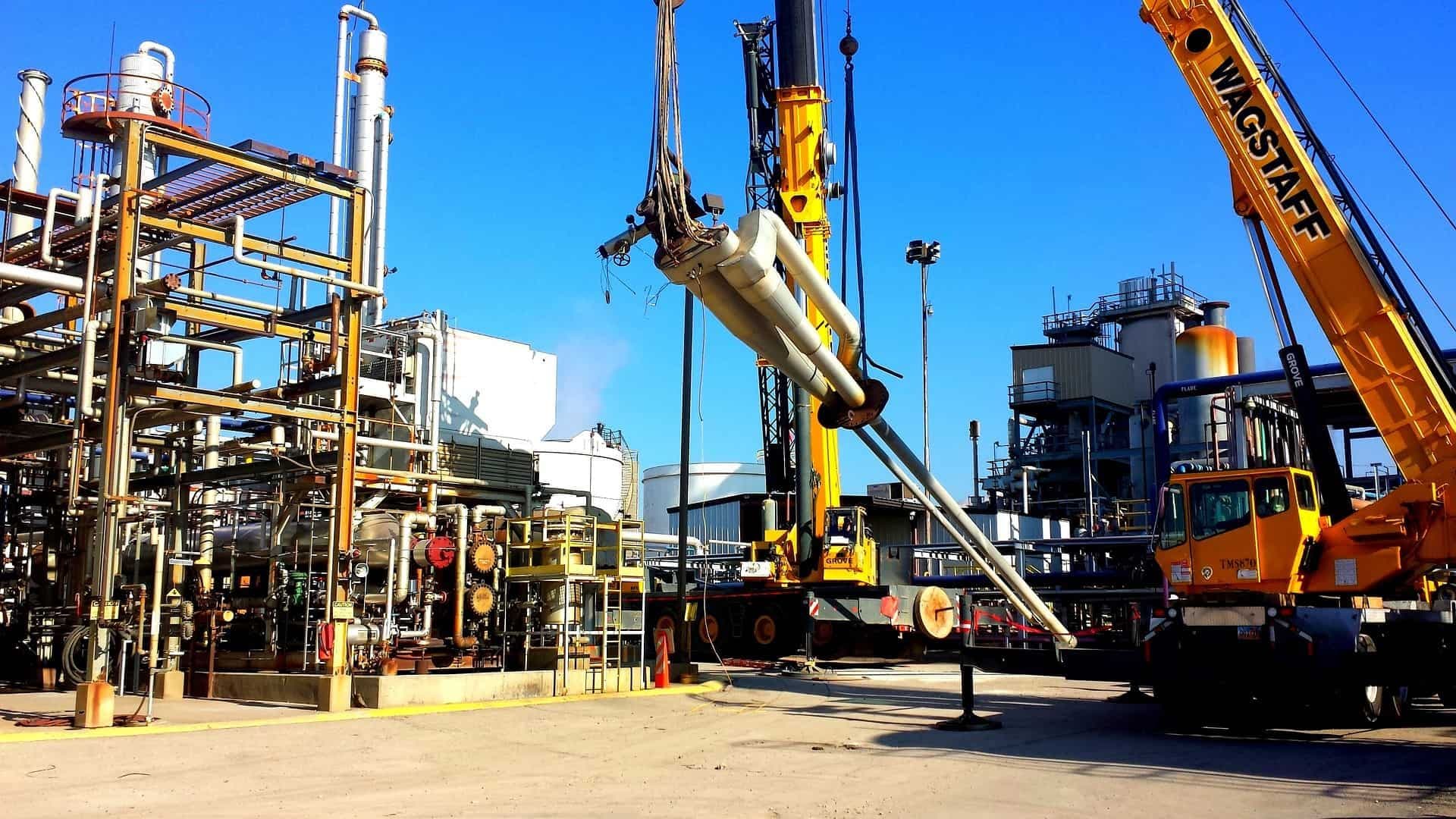
Our dry ice blasting equipment is used in many industries world wide, such as...

Iron & Aluminum Foundry
Tyre Mould Cleaning
Pharmaceutical

Food Processing
Printing Presses
Automobile Production (die casting, spot welding, paint shop)
Rubber Plastic Injection Molding
Pulp Paper
Electronics (switch gear, semi conductors, circuit boards)
Power Stations (generators, transformers, electric motors)  
Industrial Maintenance Cleaning Services
Disaster Recovery (fire water damaged machines and buildings)
Historic Restorations

What is Dry Ice?

Dry Ice is made of liquid CO2 (carbon di-oxide) and is TOTALLY FREE OF WATER. Liquid CO2 is injected into a production cylinder at 14 -17bar (200-290 psi), where it expands at atmospheric pressure into CO2 snow. This snow is then compacted by rod & piston into solid CO2 = Dry Ice. Different types of Dry Ice machines produce various forms of Dry Ice.

The most common forms of Dry Ice are:
Blocks 10-20kg p/block
Nuggets rod shaped, 10-16mm diameter, 15-30mm in length
Pellets rod shaped, 2.5-3.5mm diameter, 3-8mm in length
Disks square, usually 150x150x10-15mm (rare, only used by airline caterers for some airlines.The trend is to use nuggets and pellets, which are more comfortable to handle and cheaper to produce)

Dry Ice as an industrial product has been around for approximately 80 years and is mainly a consumable in the food production and transport industries. Since its invention many other applications have been found. A more recent application is Dry Ice Blasting.

Properties of Dry Ice:
Temperature of -78.5 Celsius ( -173° F)
Specific Weight is approximately 1450kg/m3
Dry Ice is free of water (pure CO2 = 100% dry)
Dry Ice is not conductive
Dry Ice converts to CO2 vapor on surface impact
Dry Ice is free of oxygen (anti bacterial)
Dry Ice is not toxic (food grade CO2)

What is Dry Ice Blasting?

Dry Ice blasting is similar to sand blasting. Both use compressed air as kinetic energy, feeding particles into a high velocity air stream from a blasting unit, via a hose, through a nozzle onto a surface. Dry Ice blasting does not compete with sandblasting. It has different properties. Sand blasting is abrasive (corund, ash, steel shot, glass beads, etc.). Along with the contaminate it removes surface material. It is therefore ideal to remove rust corrosion, which Dry Ice cleaning cannot. Sand blasting produces secondary waste, which needs to be disposed of at considerable cost. Dry Ice blasting is not abrasive. It does not remove surface material (given a trained operator). Dry Ice blasting does not produce secondary waste. The Dry Ice material sublimes to CO2 vapor on impact. Only the contaminates have to be managed.

The Cleaning Action of Dry Ice Blasting is because of three reasons:

Kinetic Energy from compressed air propels the Dry Ice particles up to sonic speeds. Though  very light  in weight, they puncture the contaminate and chip away at it, thereby opening the surface of the contaminate. On impact, solid CO2 absorbs energy and sublimes instantly to CO2 vapor.

Thermal Differentials create an immediate and localized cold shock to the contaminate, which contracts at -78.50°C versus a substrate, which usually only cools down by up to 15°C to current temperature. This promotes a contact break between contaminate and substrate. It is particularly noticeable where hard resins have been applied to metal surfaces.

Sublimation: As the Dry Ice sublimes on impact, it increases up to 700 times its volume from solid to vapor, when it enters the cracks within the contaminate. This gas expansion, breaking up the contaminate from within, is the major factor responsible for the Dry Ice cleaning effect.

The advantages of Dry Ice Blasting are:

a) subtle to high aggression cleaning from 2 - 12bar ( 30 - 175psi) blast air pressure.
b) 100% free of water
c) not abrasive
d) no secondary waste

The above advantages makes Dry Ice blasting so interesting and sensible to many industries. It allows cleaning of machinery in line without harming surfaces, parts or components and without interfering with electrics or electronics. At the same time it can be aggressive enough to clean many types of surfaces from hard contaminates without causing damage.

Different Dry Ice Cleaning Systems:

Two principally different systems exist today: 1-Hose AirLock and 2-Hose Venturi delivery. Both are good. Both have their own pros & cons.

1-Hose Systems use an AirLock to feed Dry Ice particles from the ice hold into a single air hose, which transports the work air / ice mix from the blast unit to the blast gun. This method of delivery allows wide ranges of blast nozzles. The very pointed delivery of the Dry Ice particles makes 1-Hose Systems the more aggressive ones at the very top end of the aggression scale.

Advantages: High / pointed aggression. Large amounts of nozzle configurations possible. Long Dry Ice delivery hose length possible (safe up to 30 m / 66 ft).

Disadvantages: High Dry Ice consumption (av. 50-80kg / 110-176lbs). Too aggressive for "soft" jobs (hard contaminants on generator windings, soft aluminum, sand stone), current rotary disk airlocks are very sensitive to humidity and are therefore difficult to run under adverse conditions.

2-Hose Systems utilize the venturi principle. Work air travels from the blast unit through an air hose, straight to the blast gun. The blast gun contains a venturi function, drawing Dry Ice particles through the ice hose from the unit's ice hold into the blast gun. There, the Dry Ice particles join the work air stream and are delivered to the surface being cleaned.

Advantages: Very even ice flow. Low Dry Ice consumption (av. 20-40kg / 45-90lbs). Light and mobile. Allowing a broad range of applications with one system.

Disadvantages: Lesser variety of nozzle configurations. Pointed aggression limited to approximately 85% of 1-Hose capability. Hose length is limited (safe to20m / 66 ft. with Fine Shot & 12m / 40 ft. useing Rough Shot Dry Ice particles).

Bottom Line: From our perspective 2-Hose systems have so far been the more user friendly and reliable ones. Covering the broad middle range of industry's needs very well, while being more economical and easily adapted to tackle contaminations on sensitive surfaces and components. For this reason CMW has concentrated on perfecting such systems and bringing them to their maximum potential. At the same time, knowing full well of the advantages of 1-Hose systems, we are within months of introducing a new 1-Hose AirLock system. This new AirLock is small, light and contains few moving parts, making it very reliable in daily use even under adverse high humidity conditions.

Crystal Particle vs. Pellet Blasting - What is Crystal Particle Blasting?

Dry Ice pellets, blocks or nuggets are ground into fine or rough sugar crystal like format by means of controlled mechanical stress. Specially developed Dry Ice Management Systems build into our Mach1 Dual Pellet Blaster and Mach2 Universal Blaster CO2 cleaning machines supply this function continuously, optimizing the Dry Ice Crystal Particle size and desired flow. This new Dry Ice Particle Flow is fed into the work air stream by our proven and rugged 2-Hose Venturi delivery method.

What are the Advantages of Crystal Particle Blasting?

1. Economy:
Slow motion video shows that approximately 60% of a Dry Ice pellet sublimes to CO2 vapor on surface impact, when being blasted via a high velocity air stream onto a targeted substrate. Only 40% of that pellet actually does the job of removing coatings and contaminates.

When particles of a defined small granular size are being used for cleaning (Dry Ice Crystals), solid CO2 pellets, blocks or nuggets are ground into fine or rough sugar like crystal particles, increasing the impact points per cm3 Dry Ice onto the substrate thousand fold and thereby drastically reducing impact sublimation. This new format utilizes the Dry Ice media more efficiently than any other method .......30-50% less Dry Ice consumption !

2. Substrate Safety:
CMW CO2 Crystal Particle Cleaning systems create particles of substantially reduced individual mass, compared to standard Dry Ice pellets without any loss of cleaning power. It is the distribution of equal Dry Ice mass over a much larger amount of impact points, which gives CO2 Crystal Particle Cleaning the ability to clean very sensitive surfaces. For example your generator and motor windings, electronics, circuit boards, semi conductor tools, even wood or soft sand stone substrates are protected. ...Sensitive surfaces are safe !

CMW Dry Ice Blasting Equipment:


CMW.1000 Basic Pellet Blaster

The CMW.1000 is the classic 2-Hose (venturi) pellet (3mm) dry ice blasting system by CMW CO2 TECHNOLOGIES. Solid, rugged, hand mirror polished stainless steel. Price and efficiency at its best. CMW.1000 is used in a broad range of industry service applications

Mach1 Dual Action Blaster

The Mach1 is the advanced CMW 2-Hose (venturi) Dry Ice Blasting Equipment. A state of the art Dry Ice Pellet Grinder is fully integrated. Apart from the classic pellet blasting, the Mach1 gives you Crystal Particle Blast Cleaning capability. Even the most sensitive surfaces are protected. Dry Ice Blasting in the electronics and the power industry is now safe! Straight pellet action supplies maximum aggression when needed.

One unit - Two Systems

Mach2 Universal Blaster

The Mach2 is CMW's top line 2-Hose (venturi) Dry Ice Blasting System. With it's unique Dry Ice Management System, the Mach2 works with Blocks, Nuggets & Slabs. Fine or rough blast cleaning action. Your choice! Sensitive surfaces are safe (fine crystal). Full power available when needed (rough crystal)

Goes where you want it  – 
Works where you need it !


Home | Industrial Cleaning | Products | Applications | Contact | Links | Dryiceinfo | KMI Foundry Products
Copyright © 2006-07 CMW-Dryice All rights reserved Dry Ice Blasting - Dry Ice blast Cleaning